This move aims to curb the annual outflow of
PKR 728 billion in foreign exchange paid
to foreign shipping companies
Business Reporter
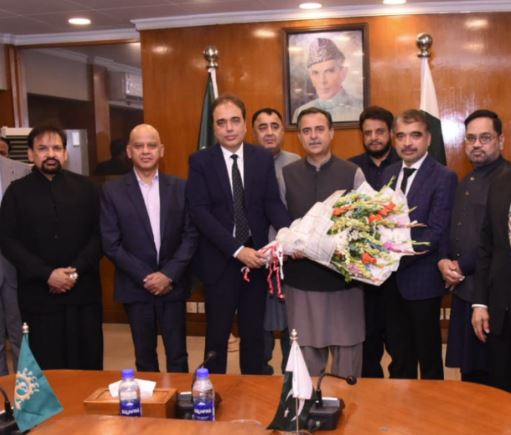
Karachi: The Federation of Pakistan Chambers of Commerce and Industry (FPCCI) has announced that Federal Minister for Maritime Affairs, Mr. Junaid Anwar Chaudhry, has agreed in principle to the long-standing demand for establishing Pakistan’s own shipping lines, a move aimed at curbing the annual outflow of PKR 728 billion in foreign exchange paid to foreign shipping companies.
Federal Minister Holds Consultative Session at FPCCI
The minister made the commitment during an interactive session held at FPCCI Head Office, Federation House, Karachi, where he met representatives from the business community, shipping lines, terminal operators, customs agents, and media. The meeting focused on collaborative efforts to strengthen Pakistan’s maritime sector.
In a series of major developments, Mr. Junaid Anwar Chaudhry announced:
- Plans to establish a national shipping line with new ships added to the fleet
- An open-door policy for addressing complaints and concerns of the trading community
- A call for joint ventures with Karachi Port Trust (KPT), which has recovered encroached land worth PKR 100 billion
FPCCI Calls for Representation in Shipping Line Formation
FPCCI President Mr. Atif Ikram Sheikh welcomed the announcement and pledged full support to the Ministry of Maritime Affairs. He emphasized that FPCCI must be involved from the outset to ensure the proposed shipping line aligns with ground realities and industry needs.
Infrastructure Cess Must Serve Its Purpose: FPCCI
Senior Vice President FPCCI, Mr. Saquib Fayyaz Magoon, raised critical concerns regarding the 1.8% infrastructure cess collected by the Sindh Government from importers.
“This cess generates around PKR 300 billion, which should be transparently used to uplift infrastructure in and around ports, industrial zones, and commercial hubs, especially in Karachi,” he asserted.
In response, the minister assured the business community that he is willing to initiate a collective dialogue with the Sindh Government in the national economic interest.
Netty Jetty Bottleneck Poses Risk to National Trade
Mr. Magoon further warned about the vulnerability of Netty Jetty interchange, currently the sole access route to the country’s busiest port.
“In case of any disruption, national trade could grind to a halt. An alternative route is urgently needed,” he stressed.
Business Community Demands Regulatory Reforms
Mr. Asif Sakhi, Vice President FPCCI, advocated for greater coordination among KPT, SBP, Customs, and trade bodies to eliminate operational ambiguities. He called on customs officers to be empowered to actively facilitate traders.
Meanwhile, Mr. Aman Paracha, also a VP of FPCCI, urged the rationalization of port and terminal charges, stating that Pakistan’s cost of doing business is already too high.
“We need regionally competitive port charges. The maritime ministry must step up as a key enabler for trade,” he added.